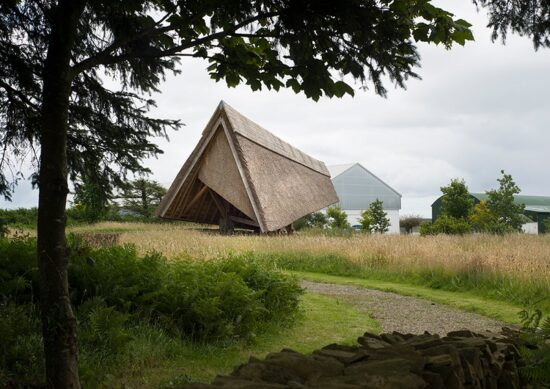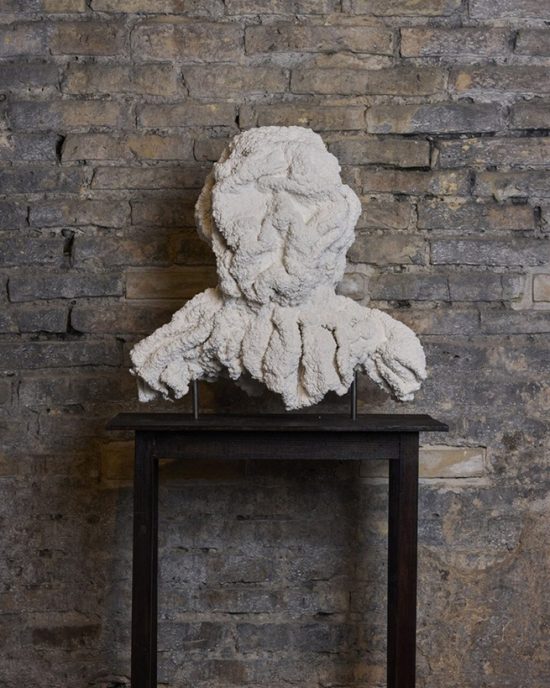
On a verdant landscape at the foot of Filopappou Hill, a unique area unfolds, drawing attention to the church of Agios Dimitrios Loubardiaris.
According to tradition, in 1658, on the eve of the saint’s feast day, the Turkish garrison commander of the Acropolis, Yusuf, wanted to bombard the church and the gathered faithful with a loubarda, a large cannon. His plans were thwarted when a sudden storm broke out the next day and a lightning bolt struck the gunpowder magazine on the Acropolis, killing him and his family. From this attempt to blow up the church with a loubarda, the church was named Loubardiaris.
The church is built on the site of the northern tower of the “Dipylon hyper ton Pylon” (Double Gate beyond the Gates). It is believed that the construction of the church took place during the period of Ottoman rule. In fact, inside, frescoes dating back to 1732 are preserved, as indicated by a dedicatory inscription.
An outdoor public space of great importance for modern Athens remains inexplicably commercially undeveloped and in a state of disrepair. It could have been a tourist attraction and a rest and recreation area along the historic city center’s walking path.
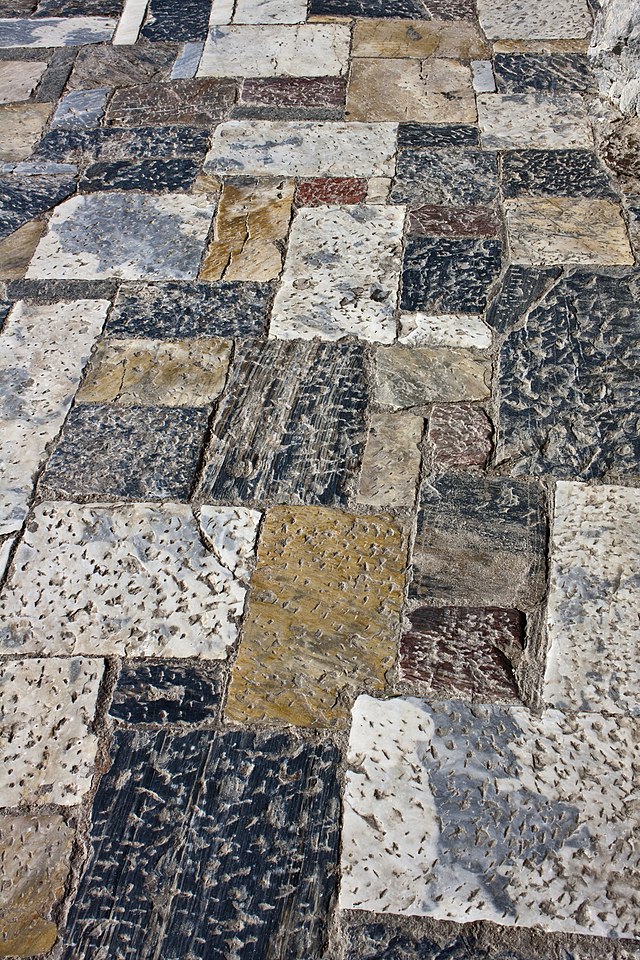
The original building has undergone many changes over the centuries. In 1955, it was restored by the famous architect and urban planner Dimitris Pikionis. At that time, several worn-out post-Byzantine frescoes from the 1700s were uncovered. For its renovation, cobblestones, marble elements from neoclassical buildings, concrete sculptural zones, as well as Byzantine and folk elements were used. The church is usually open daily until noon and often remains open during the rest of the day, especially when a service is being performed.
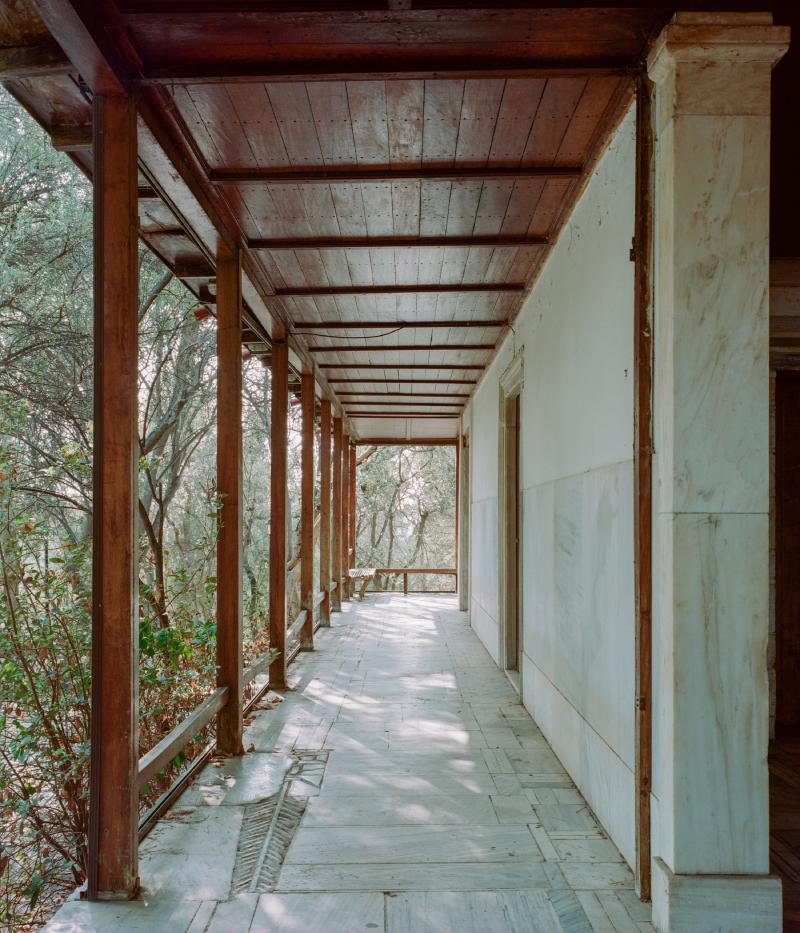
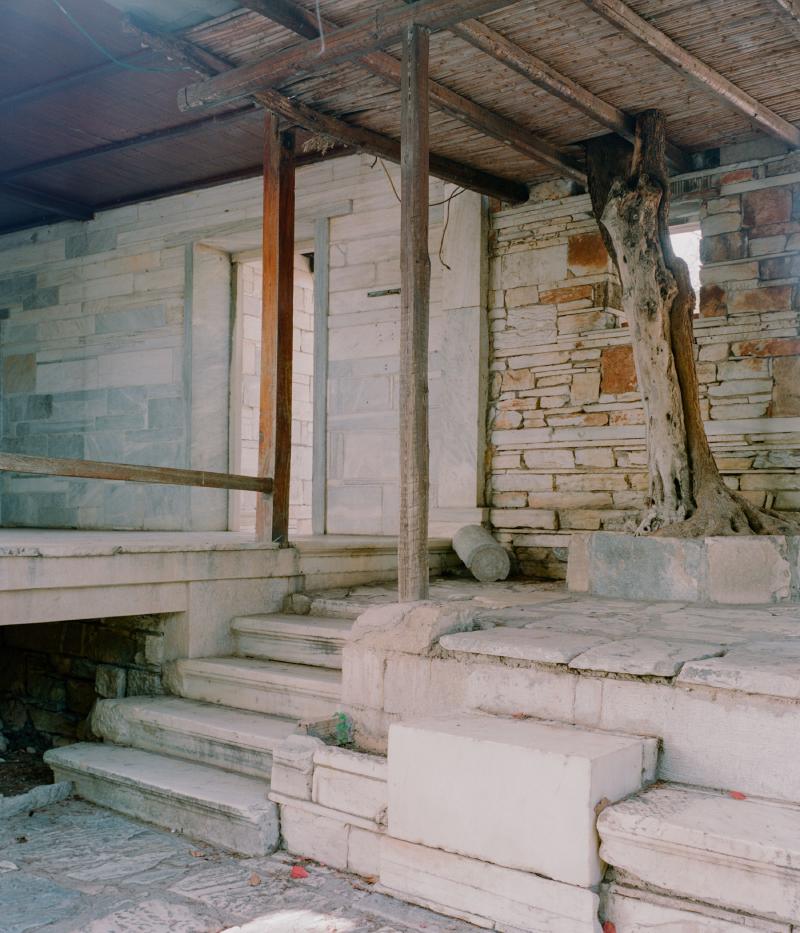
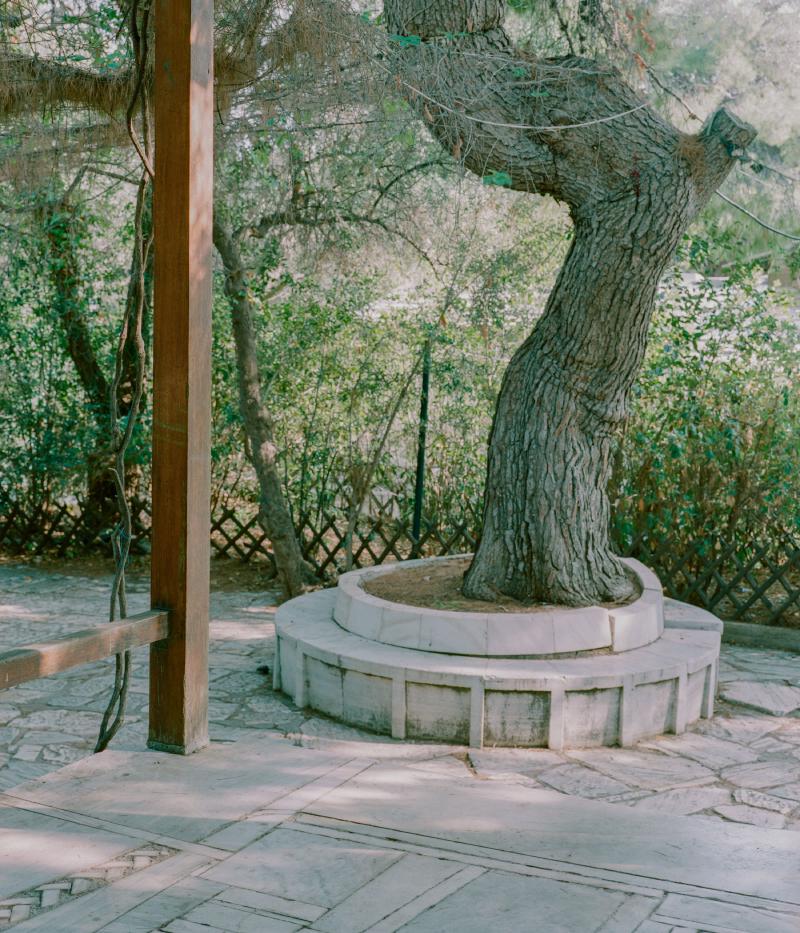
Today, visitors can reach the chapel by following the paved road designed by D. Pikionis, which winds through an environment lush with Mediterranean vegetation. Next to it, one can see the historic cafe of Agios Dimitrios Loubardiaris, known as the “resting place” (anapavtirio), a name given to it by the great architect himself.
The paved terraces, benches, and the frontal view of the Acropolis rock make up the wooden “resting place” which remains closed and inactive. It’s worth noting that the work on Filopappou Hill was declared a UNESCO-protected monument in 1996 and designated a “historic preserved monument” and “work of art” by the Ministry of Culture.
In the past, various initiatives have been publicized by Filopappou coordinating committees to the Ministries of Culture and Tourism, but the state continues to leave the “resting place” unutilized. According to the relevant authorities, the old tourist pavilion, which many remember as “Loubo,” occasionally operates only as an exhibition space and falls under the jurisdiction of the Ephorate of Antiquities of the City of Athens.
Several residents recount countless stories, emphasizing that they spent the most beautiful years of their childhood there. “For about forty years, the cafe had undergone improvisations and interventions by its tenants during its operation, and no one took care to have it maintained by specialists. It’s a fact that it has been closed since 2005. The Ministry of Culture, which is responsible for the cafe, prefers to keep it closed almost all year, even though it could open it to the city, its visitors, and tourists.”
On the other hand, officials emphasize that the neighboring “Dionysos” cafe exists, and they add that since the monument has been designated as preserved, there is no reason for it to reopen, except in cases of concession for exhibition purposes, without affecting the aesthetic appearance of the historic building. Most of the local residents we spoke with referred to a dispute between them and the Archaeological Service. The focus of the disagreement remains the fencing of the archaeological site, especially after the murder of 25-year-old Nikolas Moustakas last August and the increase in violent incidents.
Furthermore, the controversy centers on the fact that some residents are in favor of reopening it as a simple cafe, without any major additions, and they place the blame on the Archaeological Service. Based on the fact that this is the only archaeological site with 24-hour free access, they want to “fence off” the hill and exploit it economically.
Without a doubt, this is an emblematic monument of the capital, where nature and the past coexist harmoniously, creating a unique landscape of Athenian history.
It is a public outdoor space of immense importance for modern Athens that, for inexplicable reasons, remains commercially unexploited and in disrepair, at a time when it could be a tourist attraction as well as a rest and recreation area along the city’s historic center promenade. After all, this was precisely why the top architect Dimitris Pikionis designed it.





Text by Giannis Pantazopoulos
Photos by Lorenzo Zandri
Transcreation by Panagiotis Margaritis
(The text was first published by Yiannis Pantazopoulos in the print edition of the Greek newspaper LIFO, in February 2009. The photographs were pre-published by Lorenzo Zandri in the online magazine divisare.com in June 2024.)